

Park extensions approved in Cumbria and Anglesey, new research on travellers using AI, and three changes to check before September.
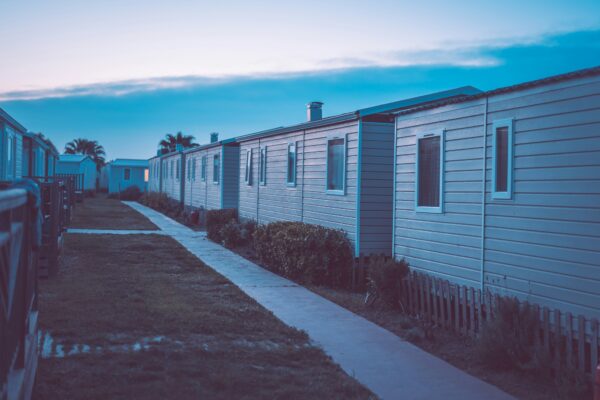
Here is your Monday read for holiday park, glamping and leisure accommodation operators. This week there is planning news from parks, a look at how travellers and travel brands are using AI, and three changes that are worth checking on before September. Every story links to where we read it.
Cumberland Council approved a 19 unit extension at Camelot Caravan Park in Longtown, Cumbria, on 10 August, Modern Campground reported. Most of the existing units are limited to holiday use under a 2015 planning condition, and the applicant expects a similar condition on the new ones.
Two Anglesey sites have applied to grow. Llanfair Beach Camp Site wants to go from seven to 14 touring pitches, saying it needs the extra pitches to stay financially viable. Glan Y Gors Farm wants 13 touring pitches plus a new toilet and shower block and a sewage treatment plant. Both applications are still under review.
Kelling Heath in Norfolk is running its second Wild Sky Weekend from 25 to 27 September, with stargazing, bat walks and a glow-in-the-dark woodland trail. Most activities are at no extra cost to guests staying at the park, and there is a three-for-two-night touring offer.
What it means for parks: Extra pitches and units can come with conditions, so check what applies to your own planning permission before you plan growth. Kelling Heath shows another way to add value: build an event around something the park already has, in this case a dark sky, and run it outside the school holidays.
Photo by Janek Valdsalu on Unsplash
Skift Research State of Travel 2026, via Open Jaw
Skift Research’s State of Travel 2026 report, as reported by Open Jaw, says 62% of travellers are now familiar with AI trip-planning tools, and their use is up 124% on last year. Only 33% of travel companies are experimenting with agentic AI, and just 6% of hotels appear in AI-generated search results. These are travel industry figures, not park figures.
TUI’s chief executive said on the company’s third quarter results call that TUI would not have had its results without AI. PhocusWire reports he sees distribution as the biggest change ahead, with TUI building links to all the large language models and seeing good conversion so far.
What it means for parks: Guests are starting to ask AI tools where to stay, so the clear, accurate facts on your own website and listings matter more. Our guides on AI Mode search and the agentic web and why paying more for search gets you less are a good place to start.
The European Commission says Article 50 of the EU AI Act has applied since 2 August 2026. A limited grace period to 2 December 2026 covers only the marking of AI-generated content in systems already on the market. For text, the labelling duty covers published text that informs the public on matters of public interest, and text that has had human review or editorial control does not need a label. It is EU law, so check whether it reaches you if you market to guests in the EU.
Search Engine Land reported on 14 August that from 1 September Google will upgrade Search campaigns that use campaign-level broad match or standalone automatically created assets to AI Max, rolling out gradually through the month. Dynamic Search Ads follow later.
WordPress 7.0.3 is a security release with 12 fixes, according to security firm Patchstack. The main one is a flaw on the login screen that could lead to a site takeover if an administrator is tricked into clicking a crafted link, and Patchstack urges site owners to update.
What it means for parks: If you run Google Ads, look at your campaign settings before 1 September and watch results after the change. If your website runs on WordPress, update it and check who has contributor access. If you market to guests in the EU, ask your adviser whether the AI Act labelling rules apply to you.
If this week has you thinking about your own guest communication, send us a note and we will point you in the right direction. Ask us a question
Holiday park operators in mid-August 2026 are seeing park extensions approved, travellers adopting AI tools, EU AI Act transparency rules in force, Google AI Max upgrades from 1 September and a WordPress security update.
One system behind every guest touchpoint. Photo by Bram Daalman on Unsplash.

Google's AI Mode gives guests one answer instead of ten links, and AI agents are starting to book for them. See what Google announced and how to prepare your venue.
Read more

A lot of web traffic is now automated, and paying more for search does not always bring more bookings. See the numbers and how to build direct demand you own.
Read more

Four 2025 signals for holiday parks: Airbnb's Experiences relaunch, AI concierges, a solar-powered caravan and the pull towards direct booking, and what each means for guest expectations.
Read more