

An egg safety warning for park kitchens, AI concierges from travel brands, OpenAI bringing ads to Europe and new guidance on labelling AI in marketing.

Here is your Monday read for holiday park, glamping and leisure accommodation operators. This week starts with a food safety warning for anyone serving food on park, then looks at how travel brands are using AI with guests, and finishes with changes to marketing and search. Every story links to where we read it.
Food Safety News reports that the UK has the most cases in a Salmonella outbreak affecting seven countries. The UK Health Security Agency counts 207 confirmed UK cases between August 2025 and August 2026, out of 341 confirmed across the countries involved since May 2025. At least 34 people have been hospitalised and one person in the UK has died. The Food Standards Agency says investigations point to eggs imported from outside the UK, mainly used by food service and catering businesses, and that there is no evidence UK-produced eggs are affected.
What it means for parks: If your park has a cafe, restaurant, bar or takeaway, ask your suppliers where your eggs and egg products come from, and make sure your food safety checks and records are up to date. Do not rely on this summary alone, and follow the latest Food Standards Agency advice.
From the room to the table. Photo by Julie Mallet on Unsplash.
UKHSA, via Food Safety News
Eurostar has launched an app in ChatGPT, PhocusWire reports, letting people search schedules, journey times and fares in everyday language before booking on eurostar.com. Eurostar says AI-driven traffic to its site is up 400% since January 2025, with ChatGPT making up 85% of it in June 2026.
Yanolja Cloud Solution is rolling out an AI concierge for hotels worldwide after testing it in more than 1,000 properties in India. Eight AI agents cover guest messages, reservations, check-in and check-out, housekeeping, room service, payments and upselling through WhatsApp or a web portal, with handoffs to staff. The company says a 25-room hotel can spend up to eight hours a day on routine requests.
TUI Musement has partnered with Eventim to put more than 250,000 live events a year in the UK and Germany into TUI’s apps and sites, covering concerts, festivals, theatre and sport.
Skift’s podcast on travel’s AI reckoning notes that Booking says AI still accounts for less than 1% of its room nights. The hosts talk about what is paying off and what is still experimental, and why data, trust and return on investment now matter more than hype.
What it means for parks: Guests are getting used to booking, asking questions and finding things to do in one place, and to a human taking over when needed. You do not need every new tool. Start by making sure the answers guests ask for most, such as check-in, activities and food, are easy to find and correct everywhere. Our article on AI chat for holiday parks explains one way to do that.
OpenAI announced on 18 August that ChatGPT Ads are coming to 31 European markets the following week. Ads will show only to people on the Free and Go plans, while Plus, Pro and Enterprise stay ad-free, and OpenAI says ads are clearly labelled and separate from ChatGPT’s answers.
The IAB has published version 2 of its AI disclosure framework, MarTech reports. It says to disclose AI where it materially affects authenticity, identity or representation, such as realistic synthetic images and video, and that routine uses like drafting copy do not automatically need a label. Chatbots should say they are AI if people could mistake them for humans. It is industry guidance, not law.
Google has launched a Preferred Sources button that publishers can put on their own websites, TechCrunch reports. Readers can use it to pick favourite sources to see more often in Search, Discover and Google News. Google says people are twice as likely to click through to a preferred source.
What it means for parks: Most parks will not buy ads in ChatGPT, but it is useful to know guests will see them. If you use AI to make images or video of your park, be careful that they show what guests will really find. If you use an AI chat on your website or app, tell guests it is AI. The Preferred Sources button is aimed at publishers, so it matters most if your park runs a news or blog section.
Cover photo by Peregrine Photography on Unsplash

If this week has you thinking about your own guest communication, send us a note and we will point you in the right direction. Ask us a question
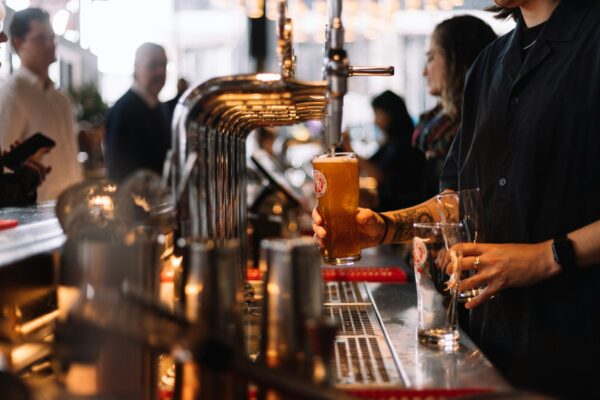
Holiday park operators in late August 2026 should note the imported-egg Salmonella outbreak, travel brands moving AI into guest journeys, ads arriving in ChatGPT in Europe and new guidance on labelling AI in marketing.
Photo by Megan Bucknall on Unsplash

In January 2025 Holidaymaker and HeyGuest announced AI chat in the Holidaymaker app. See what it does for guests and staff and how it uses your content.
Read more

Google's AI Mode gives guests one answer instead of ten links, and AI agents are starting to book for them. See what Google announced and how to prepare your venue.
Read more

Four 2025 signals for holiday parks: Airbnb's Experiences relaunch, AI concierges, a solar-powered caravan and the pull towards direct booking, and what each means for guest expectations.
Read more