
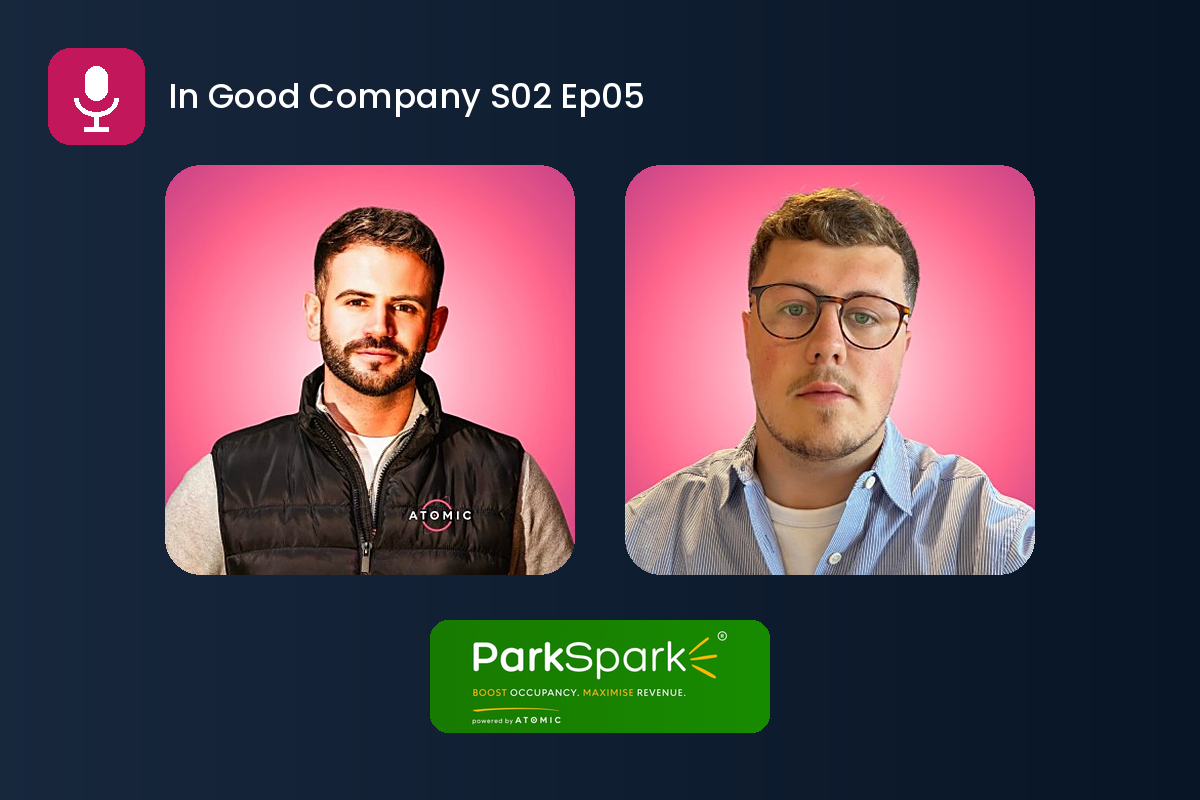
Tom and Josh from ParkSpark join Dave McRobbie to talk about using your own park data, spending ad budgets well and keeping marketing human.
In this partner episode of In Good Company, Dave McRobbie talks to Tom and Josh from ParkSpark. Tom is CEO of Atomic Marketing Agency, and Josh is Head of Client Services. ParkSpark is Atomic’s growth service for holiday parks, built around one idea: the data your park already holds can tell you where to put your marketing.
It’s a relaxed 47 minutes. They talk about what they do with PMS data, how a smaller ad budget can sometimes do more, and why the lodge itself is rarely what gets someone to book.
Every park’s PMS holds occupancy, nights, reservations and targets. Tom says a lot of operators don’t touch it. ParkSpark pulls it out, runs it through its own analysis tools and finds the strengths and the gaps. Then comes the part Tom calls “what happens next”: campaigns across paid ads and email that sell what the park actually needs to sell, whether that’s holiday homes or caravans in the winter.
Josh, who builds those tools and goes by “the data detective”, says a lot of operators are a little afraid of their own figures, because nobody has shown them how to read them. Part of the job is showing a park that it’s doing well, and then showing where it could do a bit more.
Tom describes a pattern he sees in park ads: a nice top-of-funnel video, then a harder “book for Easter” offer, and when you click through there are five or six units left, or none for your dates. The park has paid for the click and can’t deliver the booking.
One of their smaller clients runs six hot tub pods on short stays. They were 96 to 97% full through July, August and September, so ParkSpark suggested cutting the budget rather than spending it. The same thinking applies to bigger sites: only push what you’ve got available, and let the evergreen content work in the background.
A multi-park operator in Scotland had a strong return on its Google Ads last year and put the gains into development, including new lodges for holiday home sales. The marketing budget stayed the same, so the job became getting the same or better return from it.
The answer was a more efficient account. Spend dipped in some months so that it could go up in the peak booking periods, such as the January sale, the Boxing Day sale and Black Friday weekend, helped along by creative testing and campaigns that only promote what’s free.
Josh talks about a recent change: ParkSpark had been running touring and camping together, then noticed they’re two different customers. Someone touring may travel further and move around. Someone camping is often popping away for the weekend and isn’t too worried about facilities. So they split the campaigns, built separate customer profiles and looked again at where each group comes from.
Dave brings up AI and asks how the human side fits in. Josh and Tom are clear that AI is useful for processes, reports, workflows and scheduling, and that they use it in the agency. But a social post should inform and feel authentic, and a holiday is a real, physical thing. Tom describes one venue with a gorgeous website and an Instagram feed that looked like a 1992 travel agent’s brochure, and says the brand stopped feeling consistent. Josh adds that AI can’t help an operator imagine what an extra five per cent of occupancy could look like, which is where the human conversation matters.
Josh closes the episode with a shift in how ParkSpark’s clients use social media. A hot tub lodge looks much the same wherever you are, and most guests have already chosen the area. So ParkSpark’s clients now talk more about what there is to do nearby: local walks, beach loops and partnering with local cafés on discount codes, so that guests feel welcome in the whole area and not only on the park.
They keep coming back to alignment. The website, the ads, the Instagram feed and the booking journey should all say the same thing, so what a guest sees online is what they find when they arrive.
Watch or listen to the full episode above. If you’d like to find out more about ParkSpark, visit their partner page below, and if you’d like to learn from the rest of the community, there’s more on the podcast page.
Recorded for In Good Company with Dave McRobbie. Image: ParkSpark.
Tom, CEO, Atomic Marketing Agency. Tom set up Atomic in 2022, originally as UK Holiday Marketing, and launched ParkSpark at XP Hospitality Dorset in October 2024.
Josh, Head of Client Services, ParkSpark. Josh builds ParkSpark’s data analysis tools and works with parks on the campaigns that follow.
ParkSpark, powered by Atomic. Boost occupancy. Maximise revenue.
